Hospital Bag Checklist: 16 Things to Pack (and What to Skip)
 By Rosie Hart • November 10, 2026
 Save
What's in this guide
- 1. A Roomy Bag You Can Carry
- 2. Phone and a Long Charger
- 3. Reusable Water Bottle
- 4. Snacks You Actually Like
- 5. Soft Robe
- 6. Cozy Slippers
- 7. Warm Socks
- 8. Toiletry Pouch
- 9. ID, Insurance Card and Birth Plan
- 10. Postpartum Basics for You
- 11. Baby's Going-Home Outfit
- 12. Spare Onesies
- 13. Soft Newborn Hat
- 14. Knit Booties
- 15. Receiving Blankets
- 16. Newborn Diapers
- How to Pack Your Hospital Bag Checklist
- What to Skip
- FAQ
You know the baby could come a little early, and the idea of packing in a rush while contractions start is stressful. A hospital bag checklist fixes that. You pack once, zip it up and stop thinking about it.
This list has 16 things to pack for you and for baby, each with a photo so you can picture it. Short on space? There is a "what to skip" section at the end. Pack for comfort, not for a vacation. It also fits nicely into your nesting checklist.
Short on time? Start here
- Easiest to forget: Phone and a Long Charger, because outlets are rarely next to the bed.
- Biggest comfort boost: Cozy Slippers and a Soft Robe.
- Baby's must-pack item: Baby's Going-Home Outfit, in two sizes.
1. A Roomy Bag You Can Carry
 Save
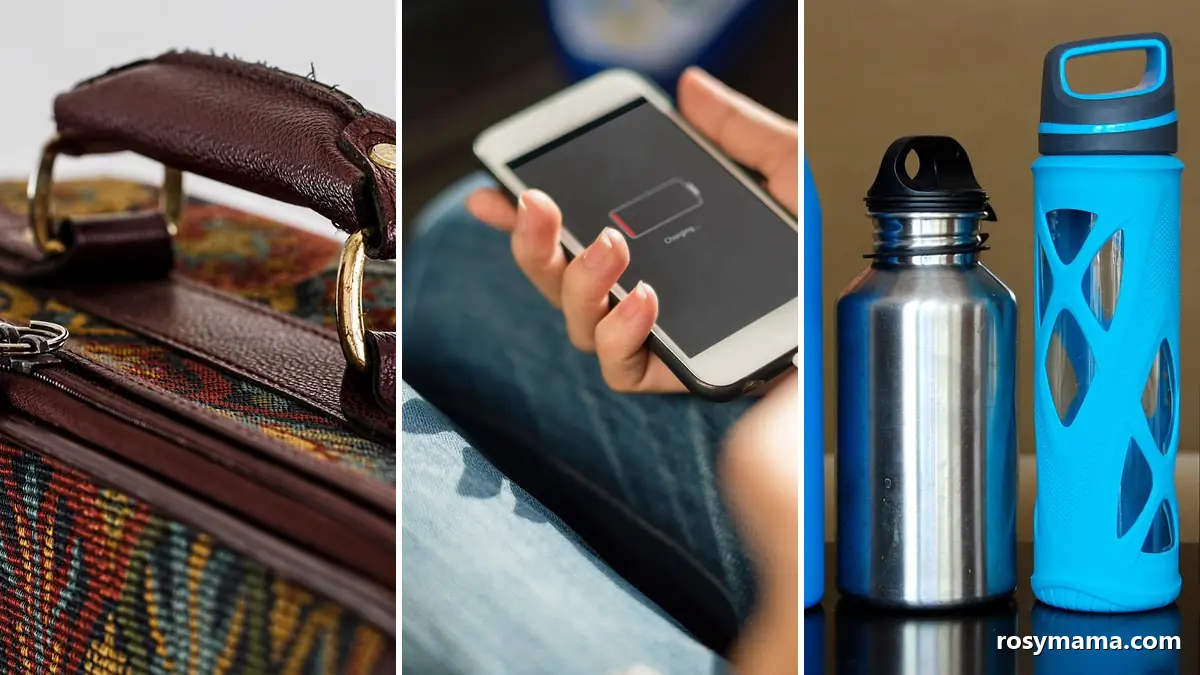
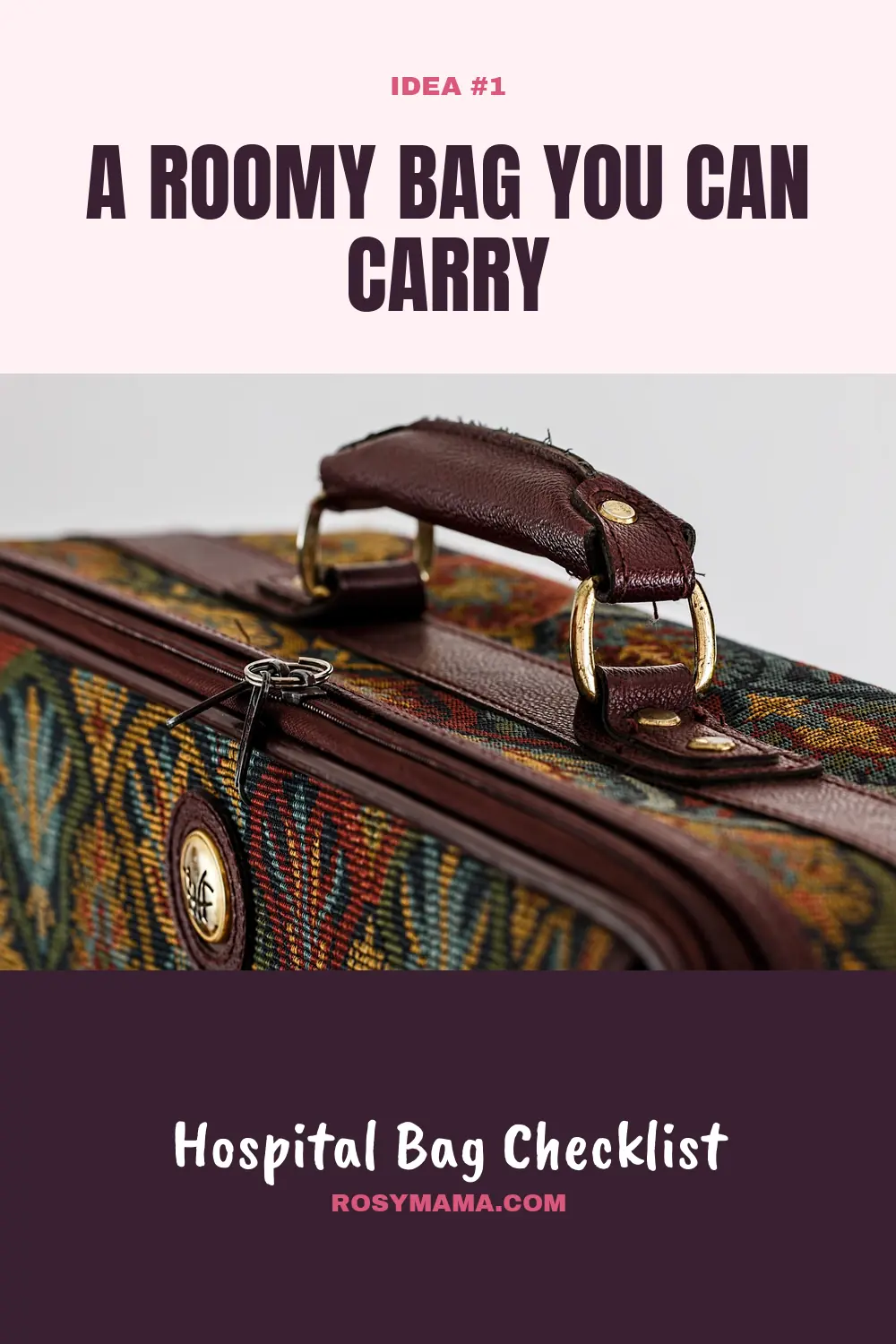
Start with the bag itself. A vintage suitcase with a leather handle looks lovely, but it gets heavy once it is full. A soft duffel or overnight bag with a shoulder strap is easier for you or your partner to carry.
What you need
- One medium soft bag with a zipper that closes easily
- A smaller pouch or tote for baby's things
- Packing cubes or zip bags to keep items sorted
- A luggage tag with your name and phone number
Best for: Every birth, planned or not.
Try this: Keep one bag for you and one for baby so your partner can find things fast.
2. Phone and a Long Charger
 Save
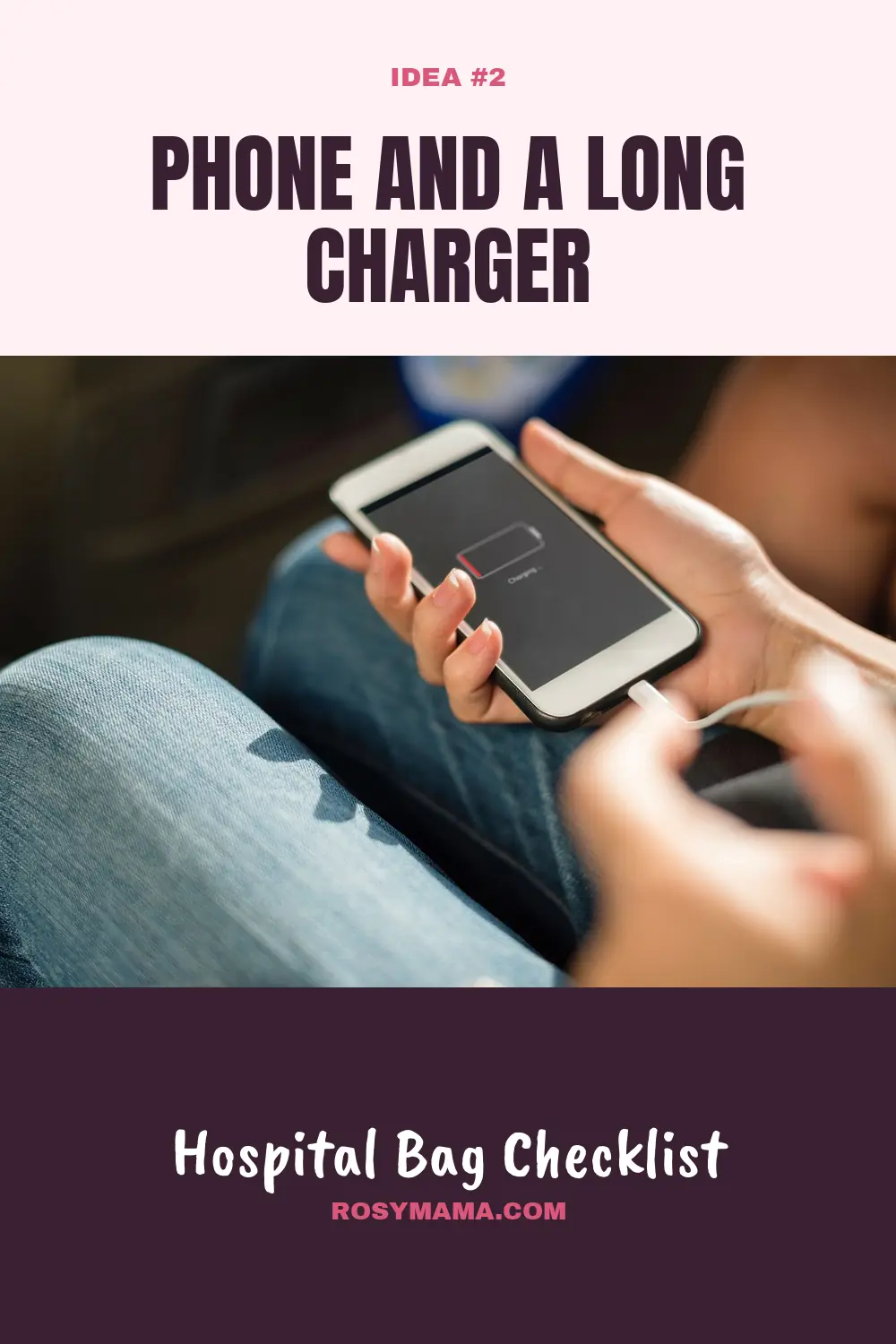
A phone with a nearly empty battery is exactly what you want to avoid. You will use your phone for photos, texts to family and a playlist. A cable that is six feet or longer lets you charge while you stay in bed.
What you need
- Phone charging cable, the longer the better
- A wall plug
- A portable power bank (optional)
- Headphones for music or a calming playlist
Best for: Long labors and quiet hours after birth.
Try this: Write down the phone numbers you want to call, in case your battery dies.
3. Reusable Water Bottle
 Save
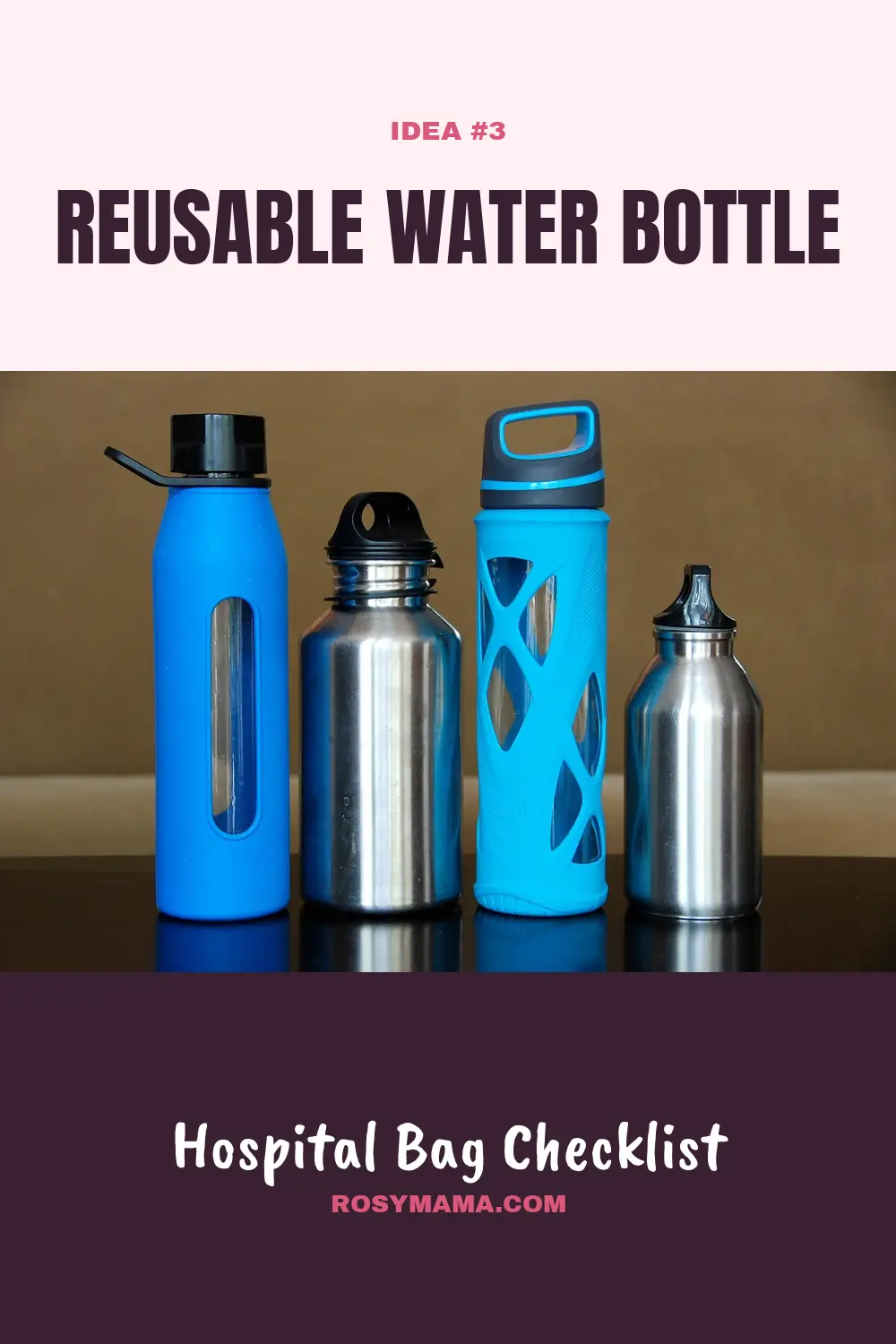
Steel or plastic, any reusable bottle works. Choose one with a straw or a lid that does not leak, so you can sip lying back. Ask your care team what you are allowed to drink during labor.
What you need
- A bottle with a straw or flip-top lid
- A spill-proof design you can use with one hand
- A second bottle for your partner
Best for: Labor and recovery.
Try this: Put a bright sticker or colorful tape on yours so it does not get mixed up.
4. Snacks You Actually Like
 Save
Hospital meals can be hours apart. Nuts and dried fruit are easy to pack and easy to eat. Skip anything messy or smelly. Remember you may not be allowed to eat during active labor, so ask your doctor or midwife first.
What you need
- Trail mix or nuts in small zip bags
- Granola bars or crackers
- Dried fruit
- A few snacks for your partner too
Best for: Early labor and the first night after birth.
Try this: Pack snacks in single-serve bags so you can grab one with one hand.
5. Soft Robe
 Save
A robe gives you something warm to put on for walks down the hallway. A thick white terry robe that ties at the waist is a cozy pick. Pick one that opens easily at the front, so it works with nursing or skin-to-skin time.
What you need
- A lightweight robe or a long open cardigan
- A front opening and a tie belt
- A color that hides small spills
Best for: Walks around the unit and visitors.
Try this: Choose fabric that dries quickly, in case it gets wet.
6. Cozy Slippers
 Save
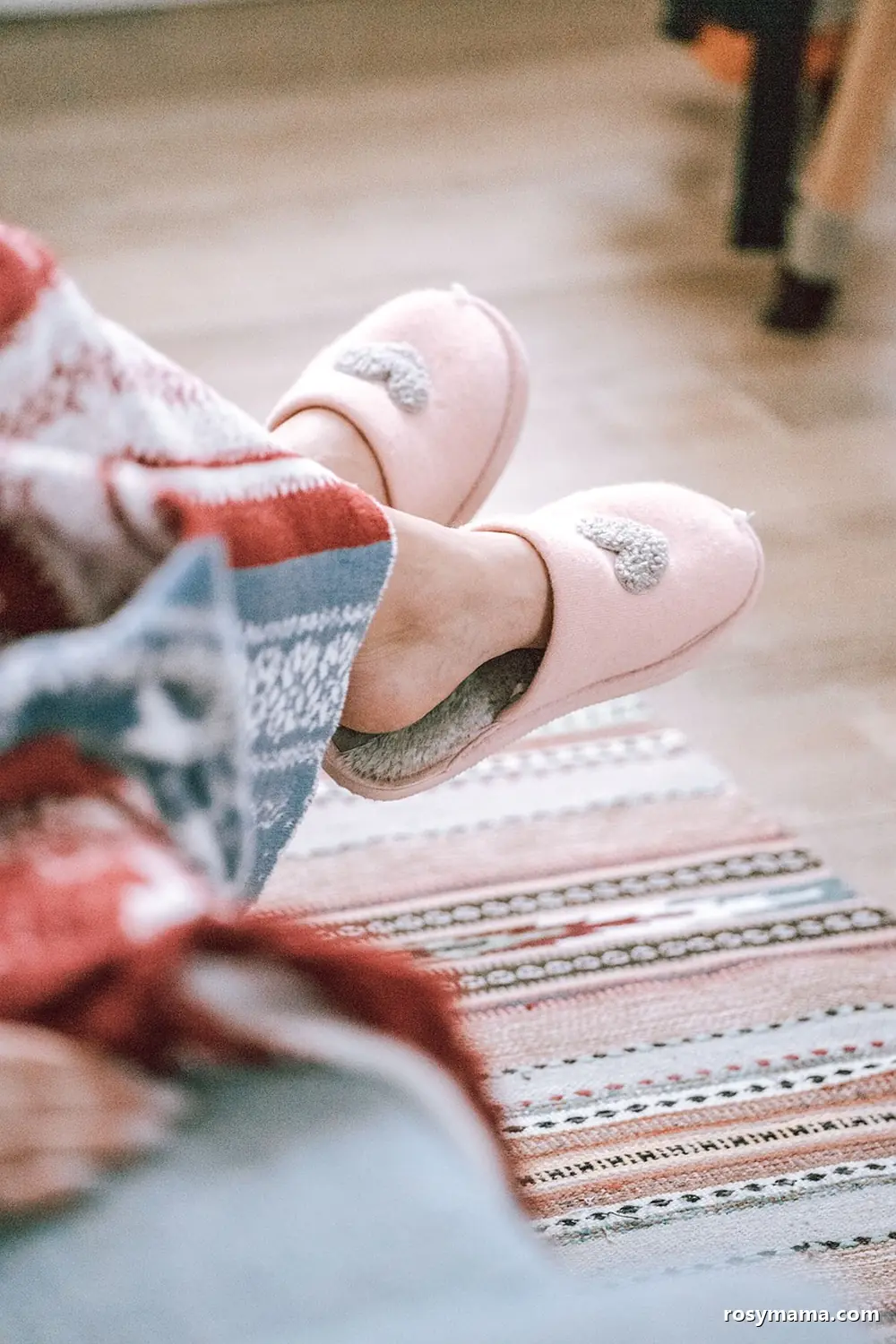
Hospital floors are cold and you will be on your feet more than you expect. Soft pink slippers with little gray hearts keep your toes warm. Look for a sole with grip (not shown here), since floors can be slippery.
What you need
- Slip-on slippers or flip-flops for the shower
- A non-slip sole
- A size that still fits swollen feet
Best for: Walking during labor and quick bathroom trips.
Try this: Wear them once at home first to be sure they stay on.
7. Warm Socks
 Save
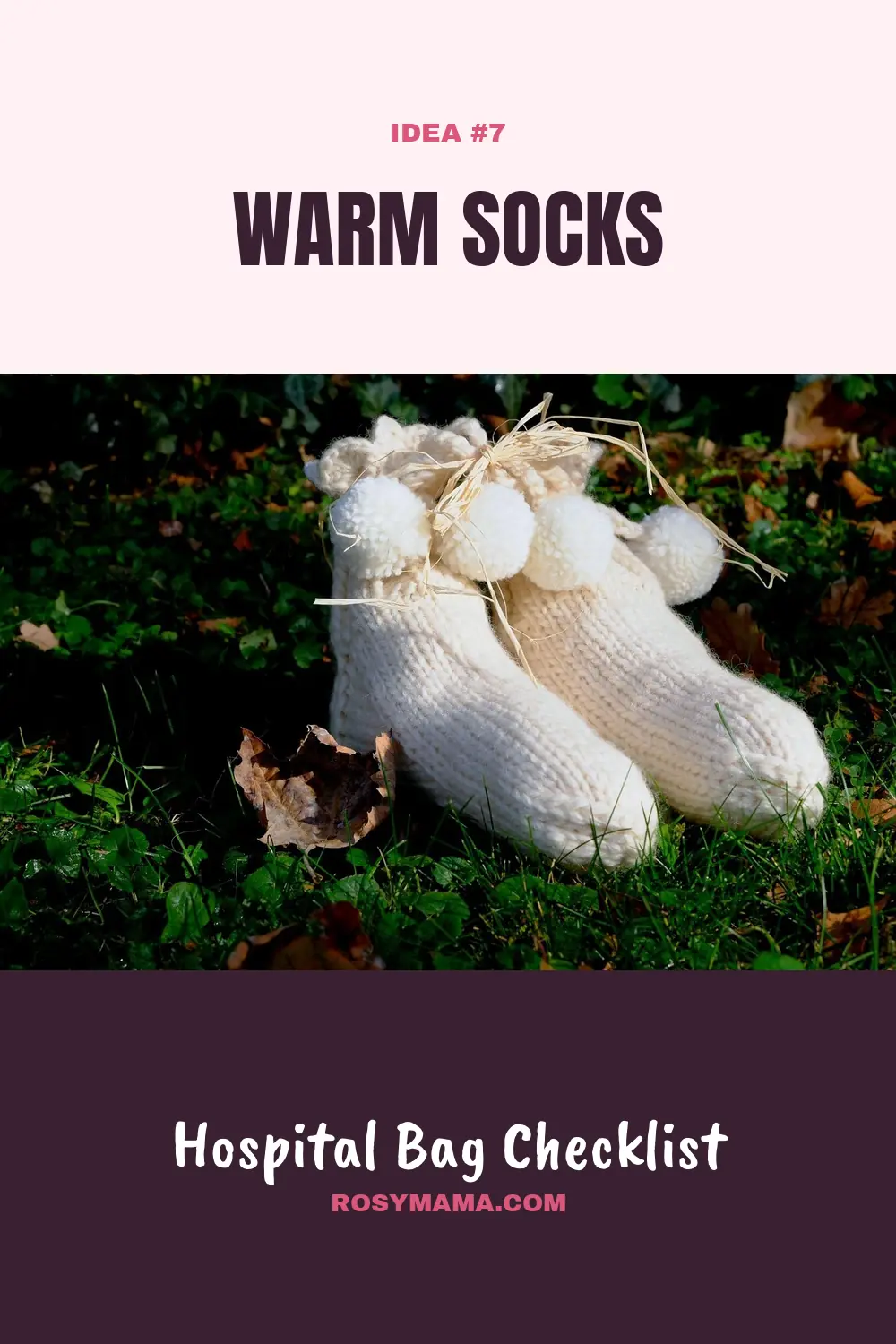
Cold feet can make the whole room feel chilly. Thick white knit socks are perfect for this. Pack two or three pairs so you always have a dry one.
What you need
- 2 to 3 pairs of thick, soft socks
- One pair with grips on the bottom
- Socks without tight elastic at the top
Best for: Cold months and long stays.
Try this: Roll them into your slippers to save space.
8. Toiletry Pouch
 Save
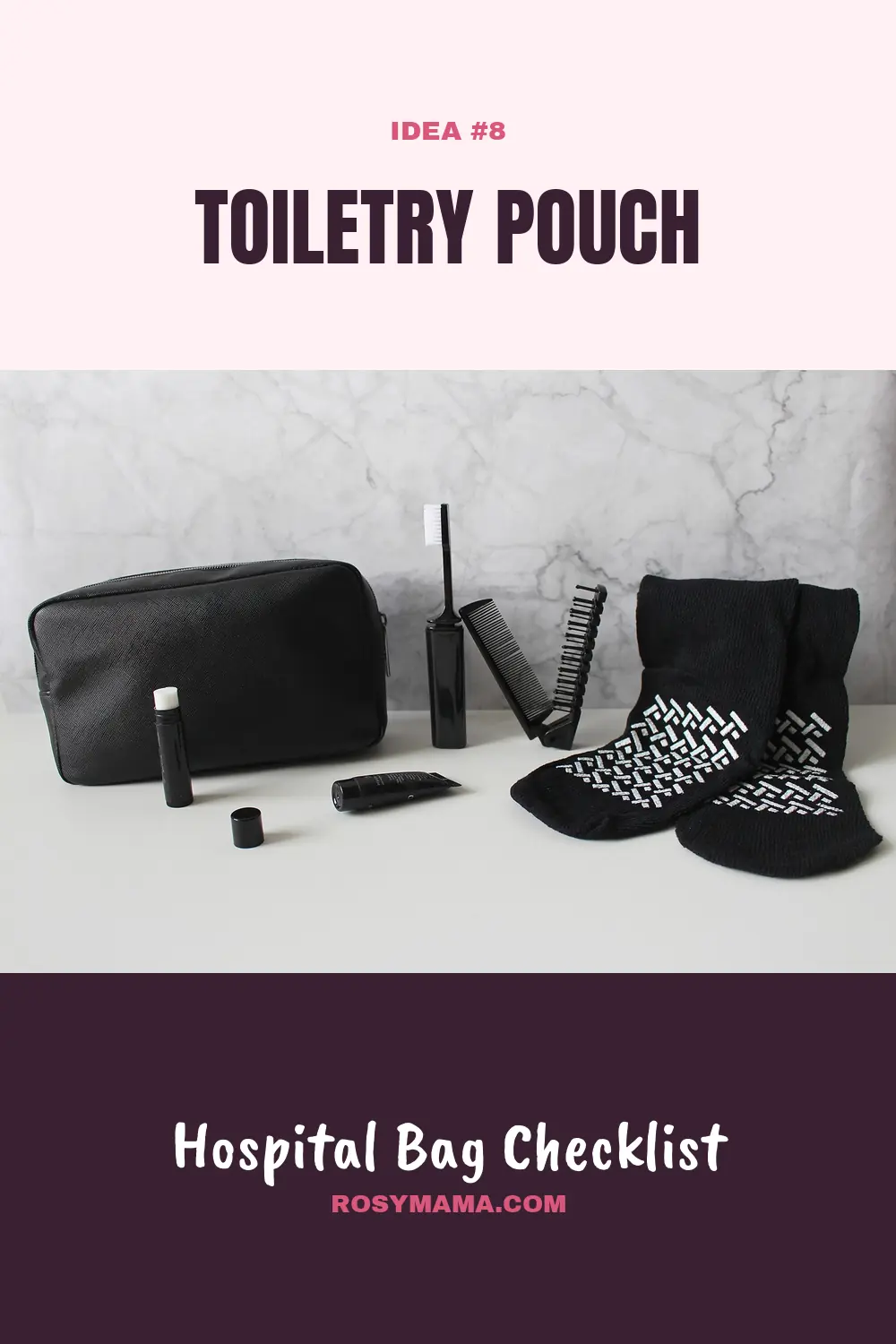
A small pouch keeps everything in one place, including the little things that are easy to forget. Here a black pouch sits with a lip balm, a folding toothbrush, a comb, a small tube and black grip socks. Hospital air is dry, so lip balm gets used all day, and brushing your teeth after a long labor feels like a small win.
What you need
- Toothbrush with a cover, travel toothpaste and floss
- A plain lip balm or two
- Comb or brush and a few hair ties
- Face wash, deodorant and a travel-size shampoo
- Fragrance-free products, since newborn skin is sensitive
Best for: Feeling fresh after a long labor.
Try this: Tuck a lip balm in your robe pocket so it is always within reach.
9. ID, Insurance Card and Birth Plan
 Save
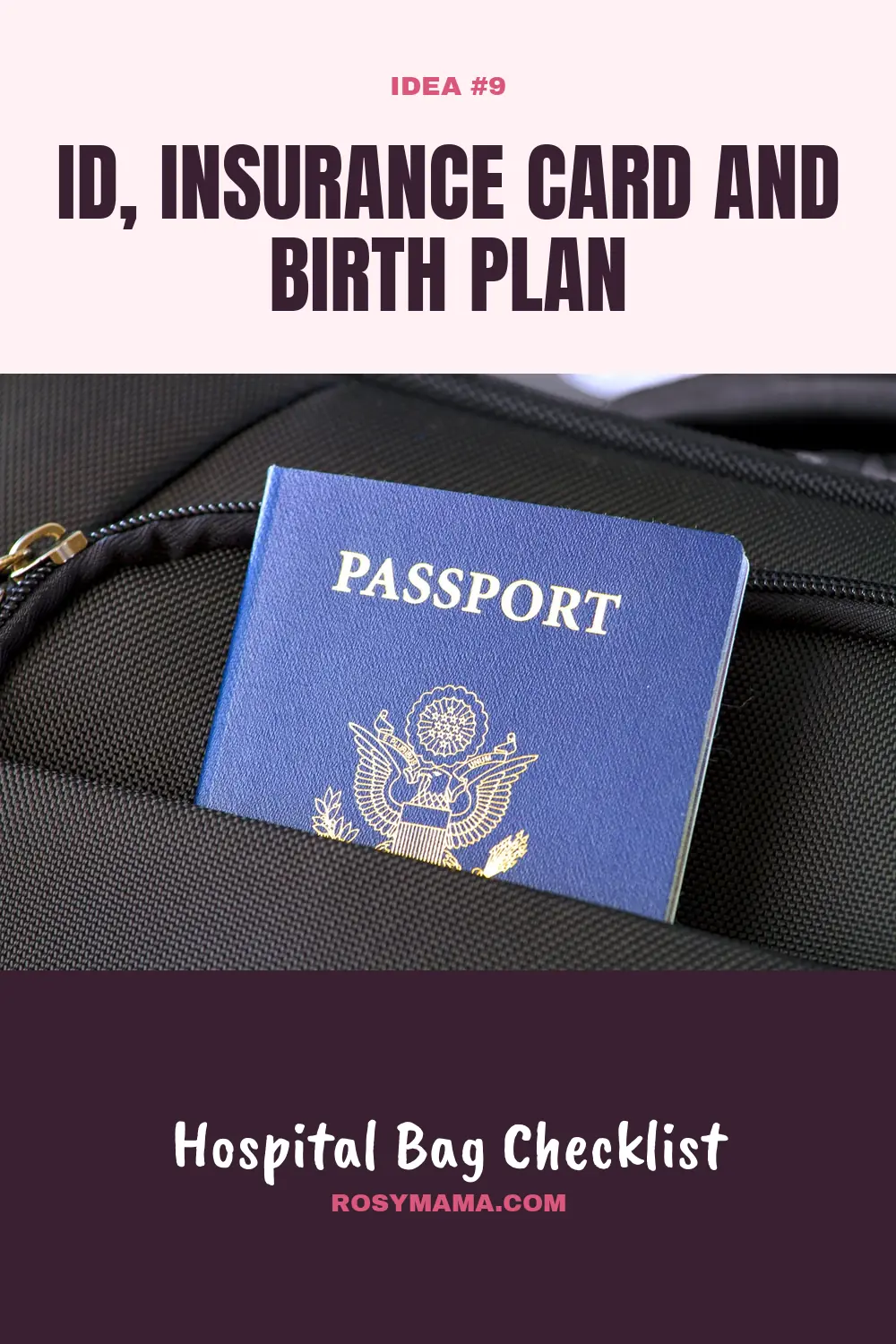
Paperwork is the easiest thing to forget when labor starts. Here a blue passport sits in the outer zip pocket of a black bag, and that is a smart idea: one pocket that only holds documents. A driver's license works just as well as photo ID.
What you need
- Photo ID, like a driver's license
- Your health insurance card
- A copy of your birth plan, if you have one
- Any forms your hospital asked you to bring
Best for: Check-in at the hospital.
Try this: Snap a photo of each card on your phone as a backup.
10. Postpartum Basics for You
 Save
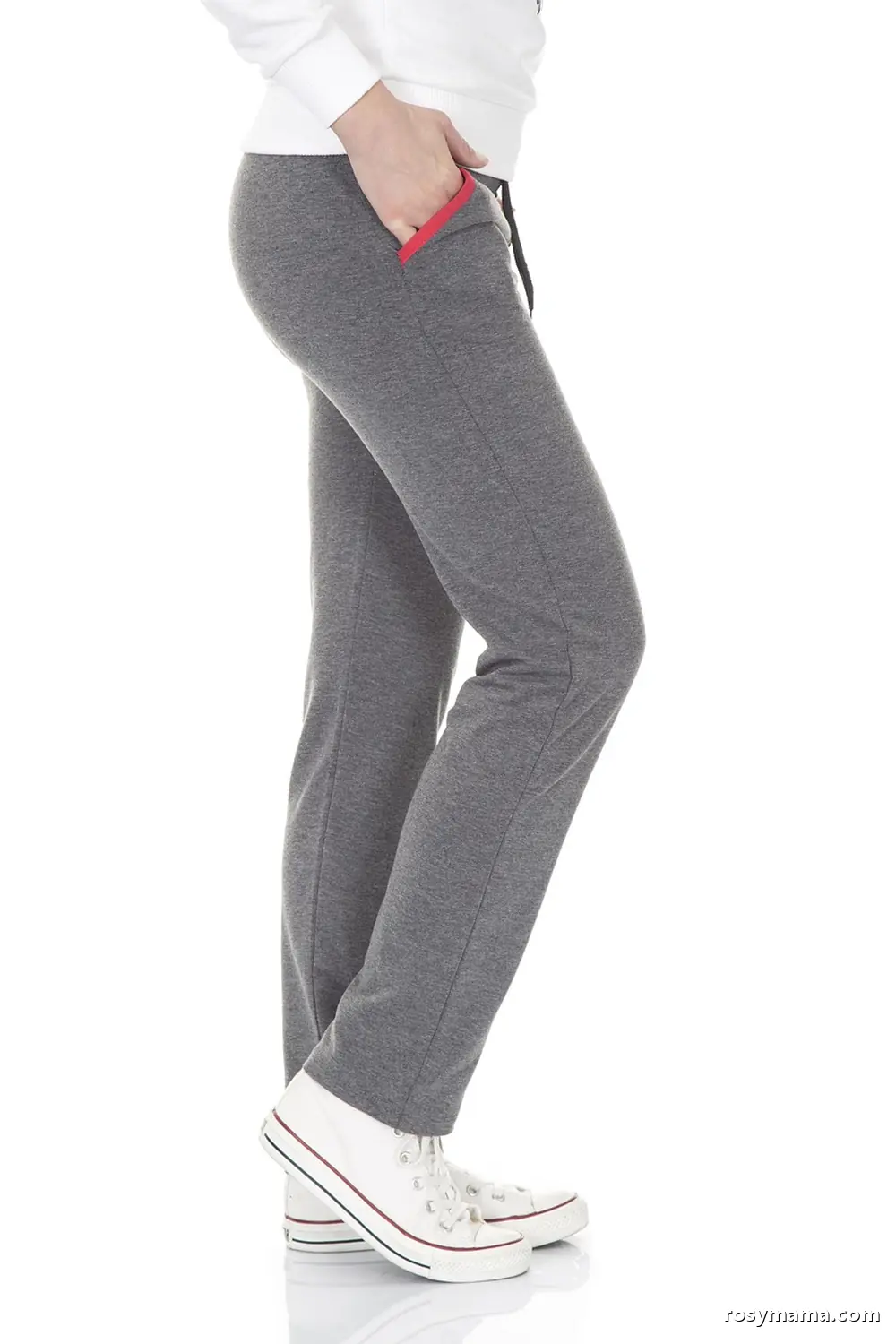
You will still look a few months pregnant when you go home, and that is normal. Loose gray sweatpants with a soft drawstring waist, like these, are kind to a sore belly. Pack your going-home outfit together with the underwear and bra you will want in the first days.
What you need
- A going-home outfit in your mid-pregnancy size
- Soft, high-waisted underwear you do not mind ruining (not shown)
- A nursing bra or soft sleep bra (not shown)
- Easy shoes you can slip on without bending
Best for: The days after birth and the ride home.
Try this: Pack dark colors, since leaks happen. Ask your nurses which pads the hospital gives you.
11. Baby's Going-Home Outfit
 Save
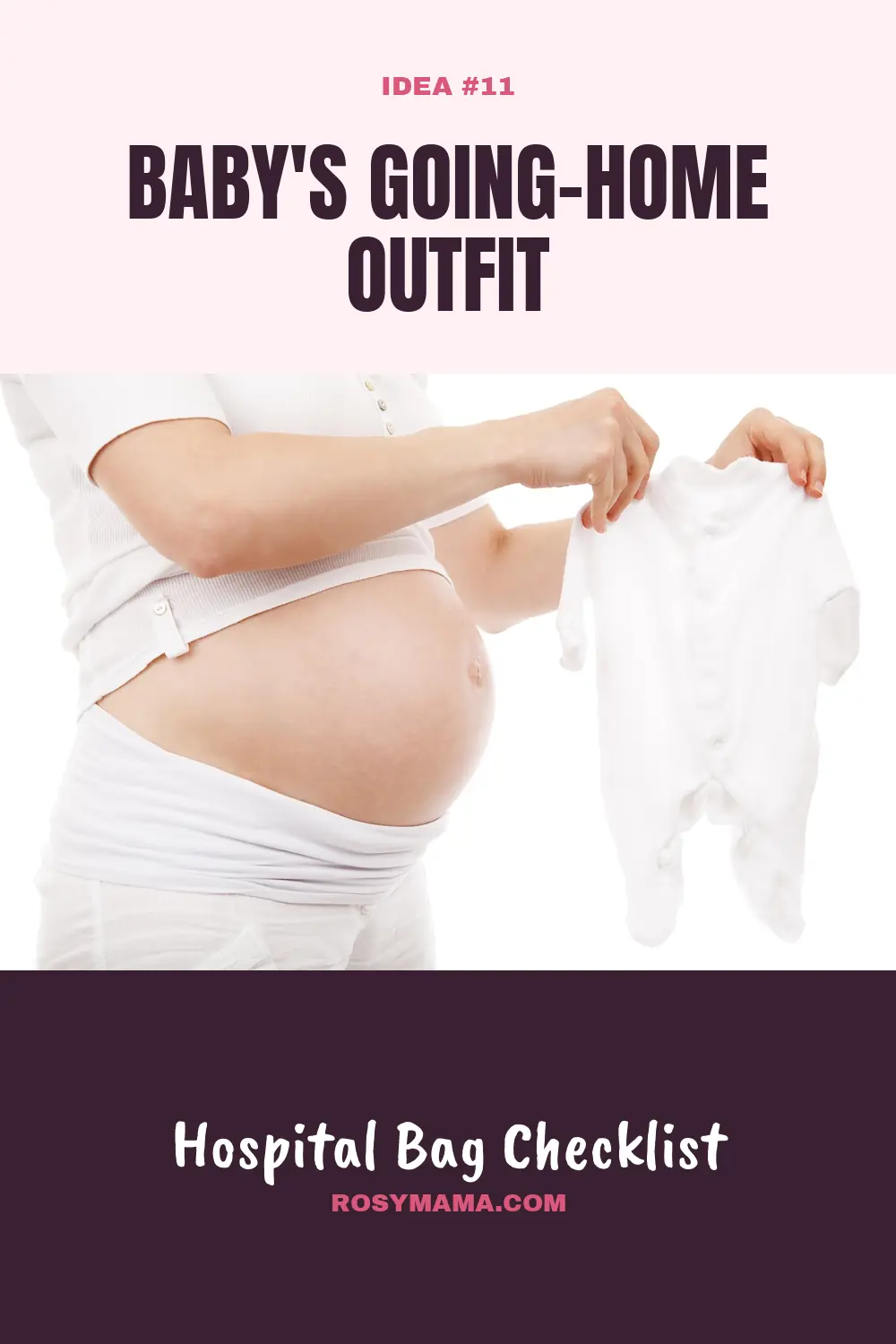
This is the photo moment you picture for months: holding up that tiny white sleeper. Pack the outfit in two sizes, because newborns can be smaller or bigger than you expect.
What you need
- A soft sleeper or bodysuit in newborn size
- The same outfit in the next size up
- Weather-friendly layers
- Easy snaps or zippers instead of lots of buttons
Best for: The ride home and first pictures.
Try this: Wash and fold the outfit ahead of time so it smells fresh.
12. Spare Onesies
 Save
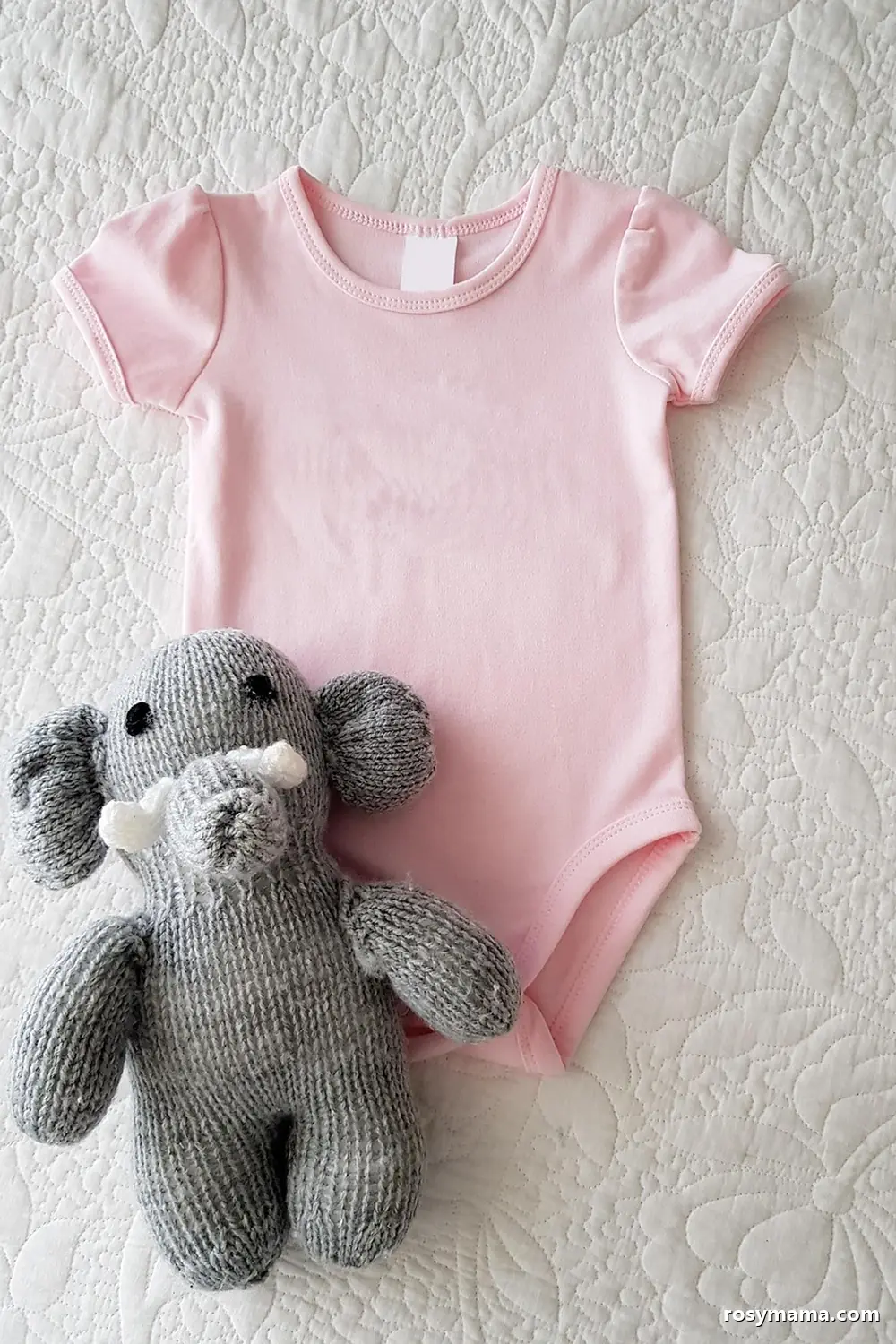
Babies spit up and leak, so one outfit is never enough. A pink short-sleeve bodysuit, like this one beside a small knit elephant, folds up small. Hospitals often provide some basics, so ask what is on hand before you pack too many.
What you need
- 2 or 3 onesies in newborn size
- Any color you like, not only pink or blue
- A zip-top bag for dirty ones
Best for: Longer hospital stays.
Try this: Pick bodysuits with envelope necks that stretch over the head.
13. Soft Newborn Hat
 Save
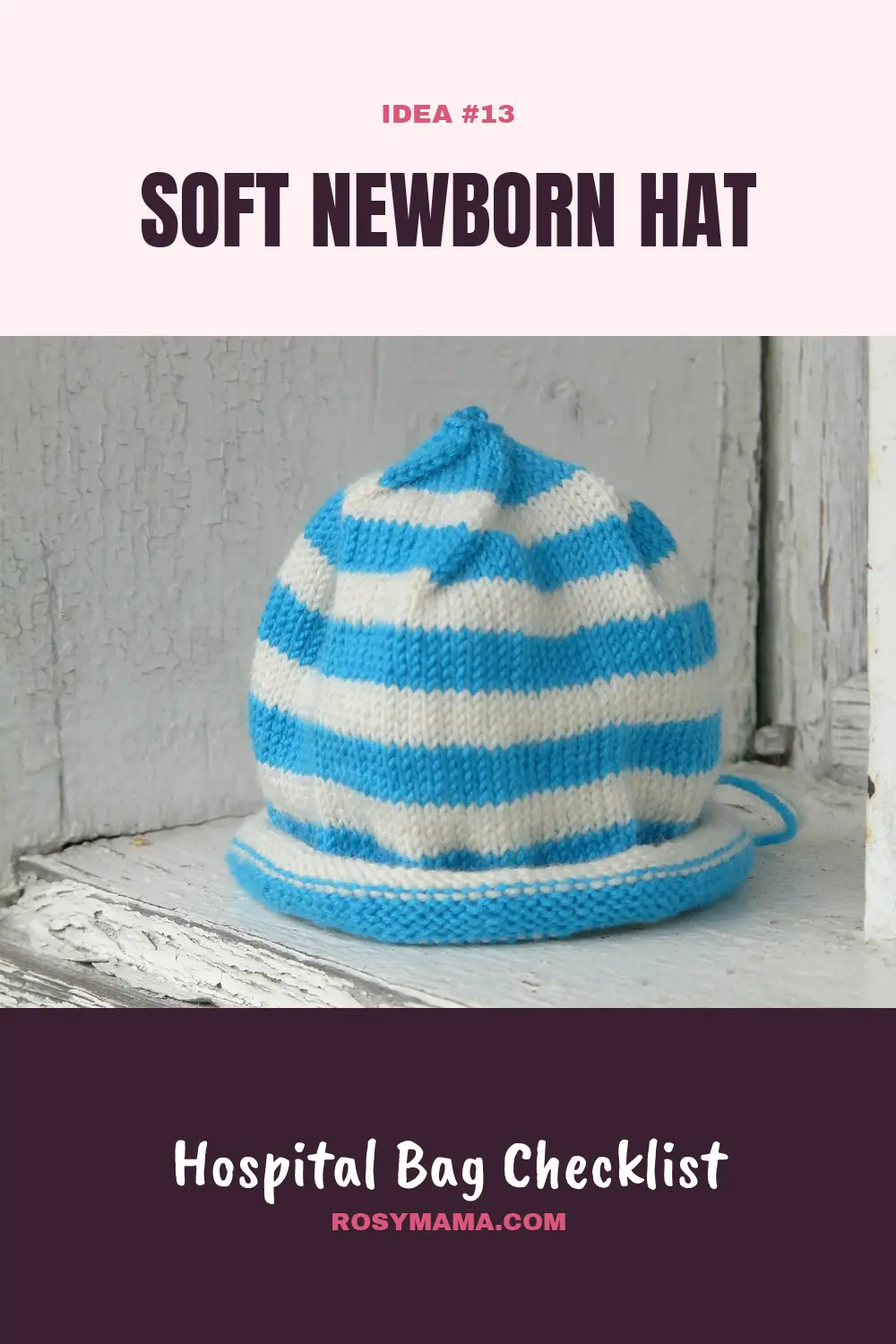
A small hat is a classic keepsake from those first photos. A striped knit hat with a rolled brim is a cute choice. Pick a soft, stretchy fabric with no scratchy seams.
What you need
- One soft hat in newborn size
- A backup in a different fabric
- A hat that stays on without tight ties
Best for: Cool weather and first photos.
Try this: Ask your pediatrician how to dress baby safely for the ride home.
14. Knit Booties
 Save
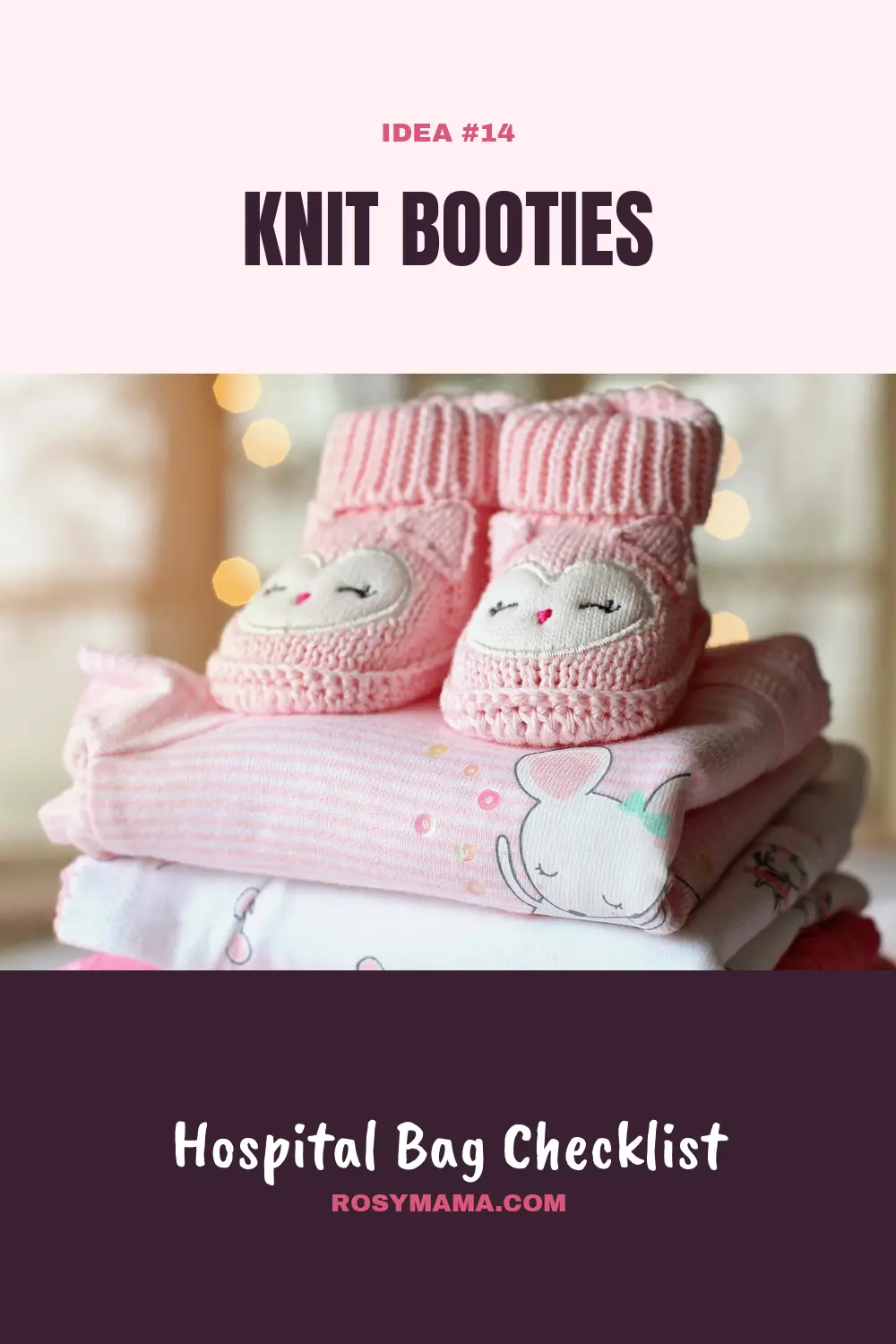
Tiny feet get cold quickly. These pink knit booties with owl faces rest on a pile of folded baby clothes. Booties look sweet, but plain socks that stay on are more practical.
What you need
- One pair of booties or baby socks
- A snug fit so they do not fall off
- A spare pair
Best for: Chilly rooms and the trip home.
Try this: Choose socks with a bit of grip to keep them on wiggly feet.
15. Receiving Blankets
 Save
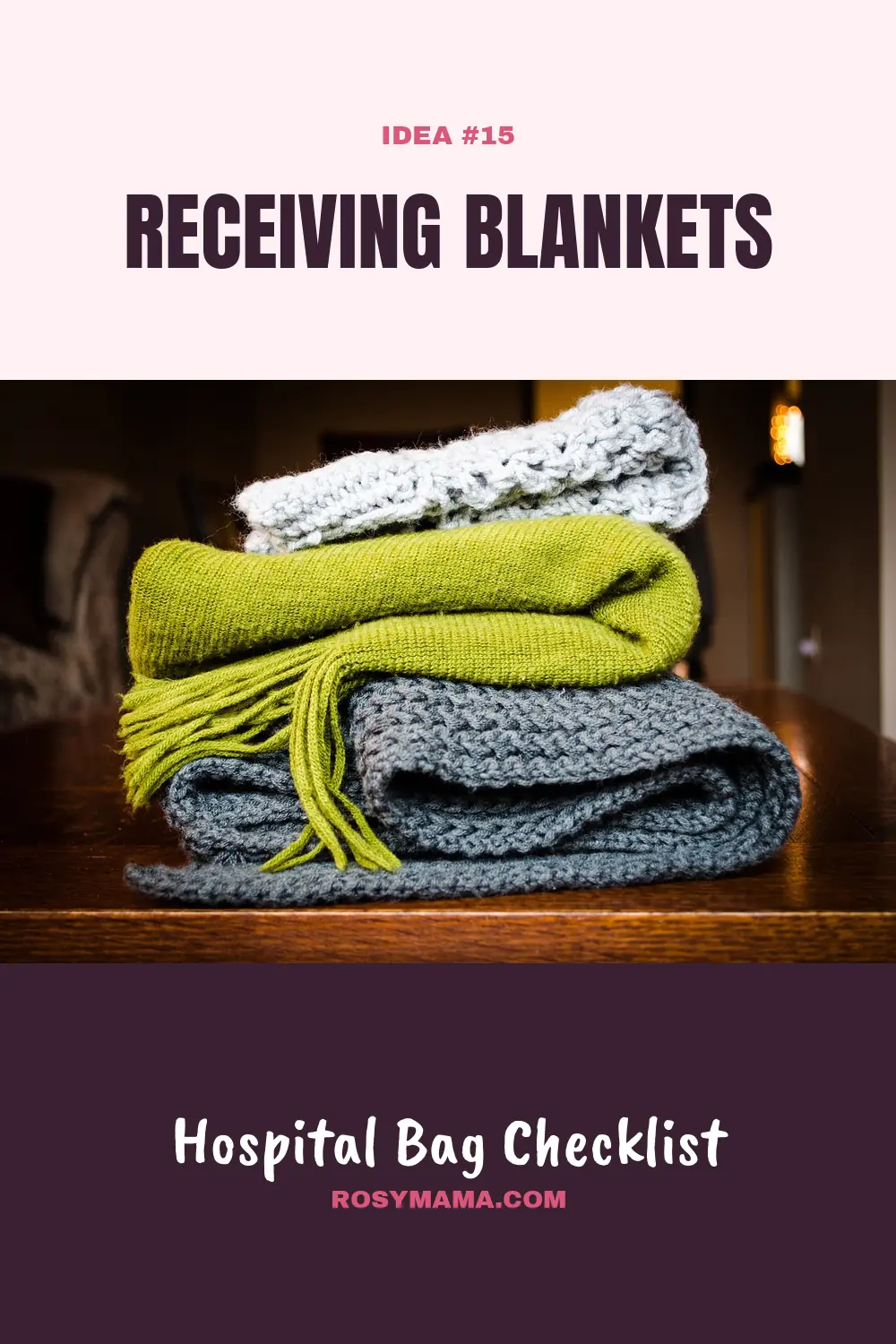
A soft blanket is perfect for first cuddles and for the photos you will take. A small folded stack, like these knit ones in gray and green, takes little space in the bag. Nurses can show you how to swaddle, so ask them while you are there.
Loose blankets do not belong in baby's sleep space. The AAP safe sleep guide says to keep blankets, pillows and stuffed toys out of baby's bed. Ask your nurses or pediatrician about safe sleep.
What you need
- One or two receiving blankets
- A lightweight, breathable fabric
- A neutral color that goes with everything
Best for: Photos and skin-to-skin time.
Try this: Keep one blanket for photos and one for cuddles while you hold baby.
16. Newborn Diapers
 Save
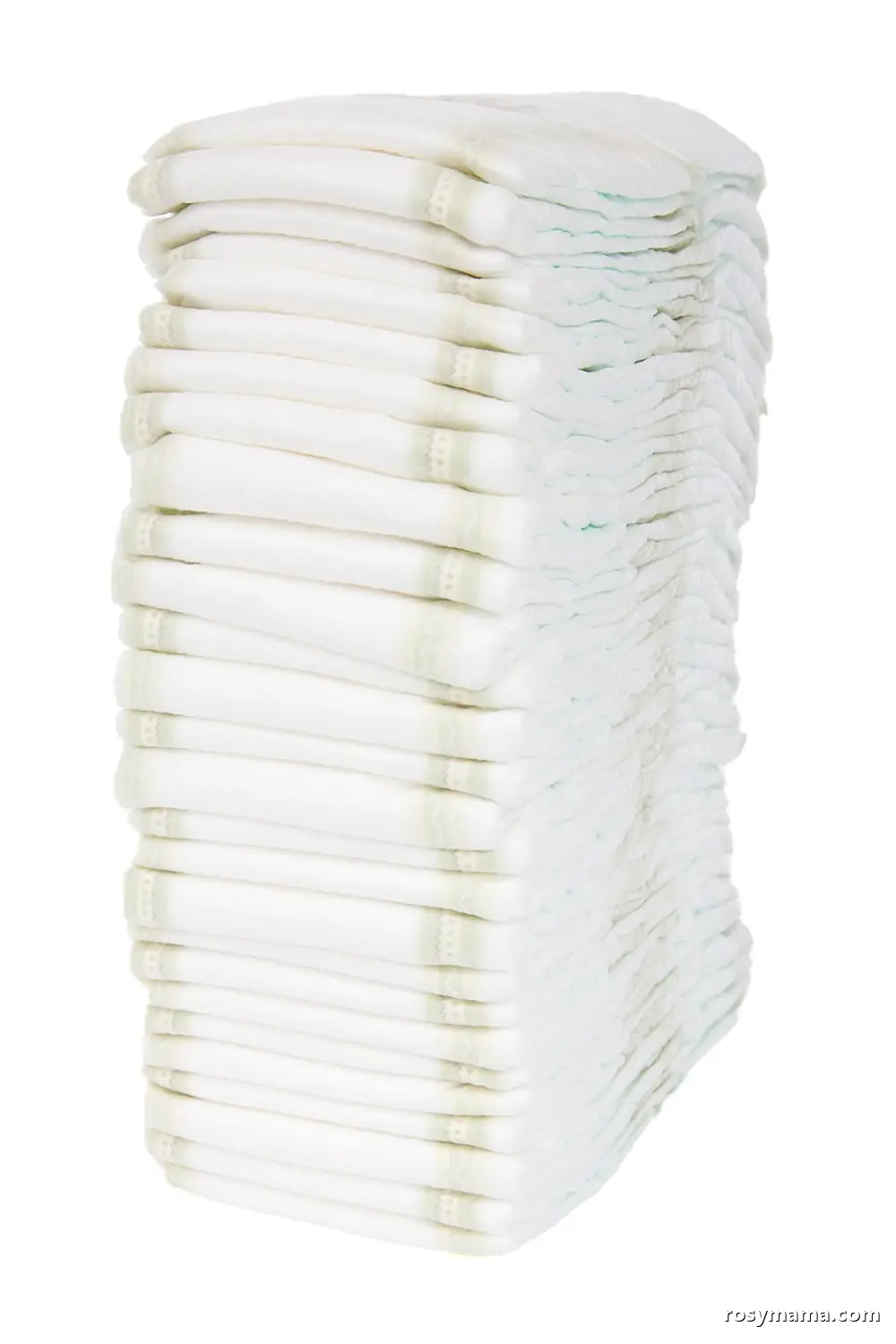
Hospitals usually give you diapers during your stay, but a few of your own are handy for the ride home. A tall stack like this one is more than you need. Pack a small handful, not a whole box. Save the rest for home, and see our baby registry checklist for what to stock.
What you need
- 5 to 10 newborn diapers
- A small pack of gentle wipes
- A travel changing pad (optional)
Best for: The ride home.
Try this: Ask your hospital what they provide so you can pack only what is missing.
How to Pack Your Hospital Bag Checklist
Aim to have everything packed a few weeks before your due date, or earlier if your doctor says you have a higher chance of an early birth. A simple order makes it less stressful.
- Set a date. Pick a week and write it in your calendar.
- Lay everything out. Put items on the bed and check them against this list.
- Pack in zones. Keep your things, baby's things and your partner's things in separate pouches.
- Leave the last items out. Phone charger, toothbrush and ID go in at the last minute.
- Tell your partner. Show them where the bag is and what is inside. Our pregnancy tips for dads cover other ways they can help.
| Item | Pack early | Add last minute |
|---|---|---|
| Baby outfit and blankets | Yes | |
| Toiletries | Yes | |
| Phone charger | Yes | |
| Snacks | Yes | |
| ID and insurance papers | Yes |
Have baby's car seat installed before your due date. Ask your hospital about its car seat rules and have a certified technician check the fit. The AAP car seat guide suggests working with a certified child passenger safety technician before baby is born.
Always check with your hospital about what they provide and any rules for visitors or food. Ask your doctor, midwife or pediatrician about any medicine before you pack it.
What to Skip
A smaller bag is easier to carry. These things are fine to leave at home:
- Lots of baby clothes. Two or three outfits are enough.
- Fancy outfits for you. A loose, comfy outfit is plenty.
- Large pillows. Check with your hospital before bringing your own.
- Valuables. Leave jewelry at home.
- Medicines without approval. Ask your doctor or midwife before you pack any.
- Big toys. Newborns do not need them yet.
FAQ
When should I pack my hospital bag?
Many parents pack a few weeks before the due date. Ask your doctor or midwife what timing makes sense for you.
How many bags should I pack?
One bag for you and a small one for baby is enough for most people. Your partner can bring a third if they plan to stay.
What should my partner pack?
A change of clothes, a phone charger, a toothbrush, snacks and a water bottle. A pillow or light blanket helps if they sleep over.
What do hospitals usually provide?
It varies a lot. Many give diapers, blankets and basic supplies. Call ahead or check your birth class handout so you pack only what is missing.
About Rosie Hart
A mom of two who writes about pregnancy style, celebrations and the everyday side of expecting, with health topics checked against trusted medical sources.
Learn more about Rosie →